All posts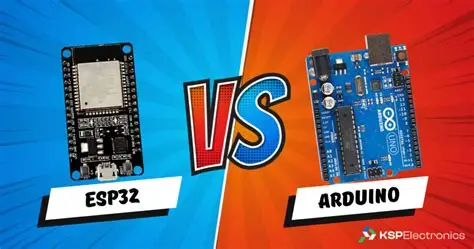
iotarduinoesp32microcontrollersengineering
Arduino Uno vs ESP32: Which One Should You Choose?
If you’re diving into embedded systems or IoT, choosing the right microcontroller is key. Here’s a quick breakdown to help you decide:
Arduino Uno
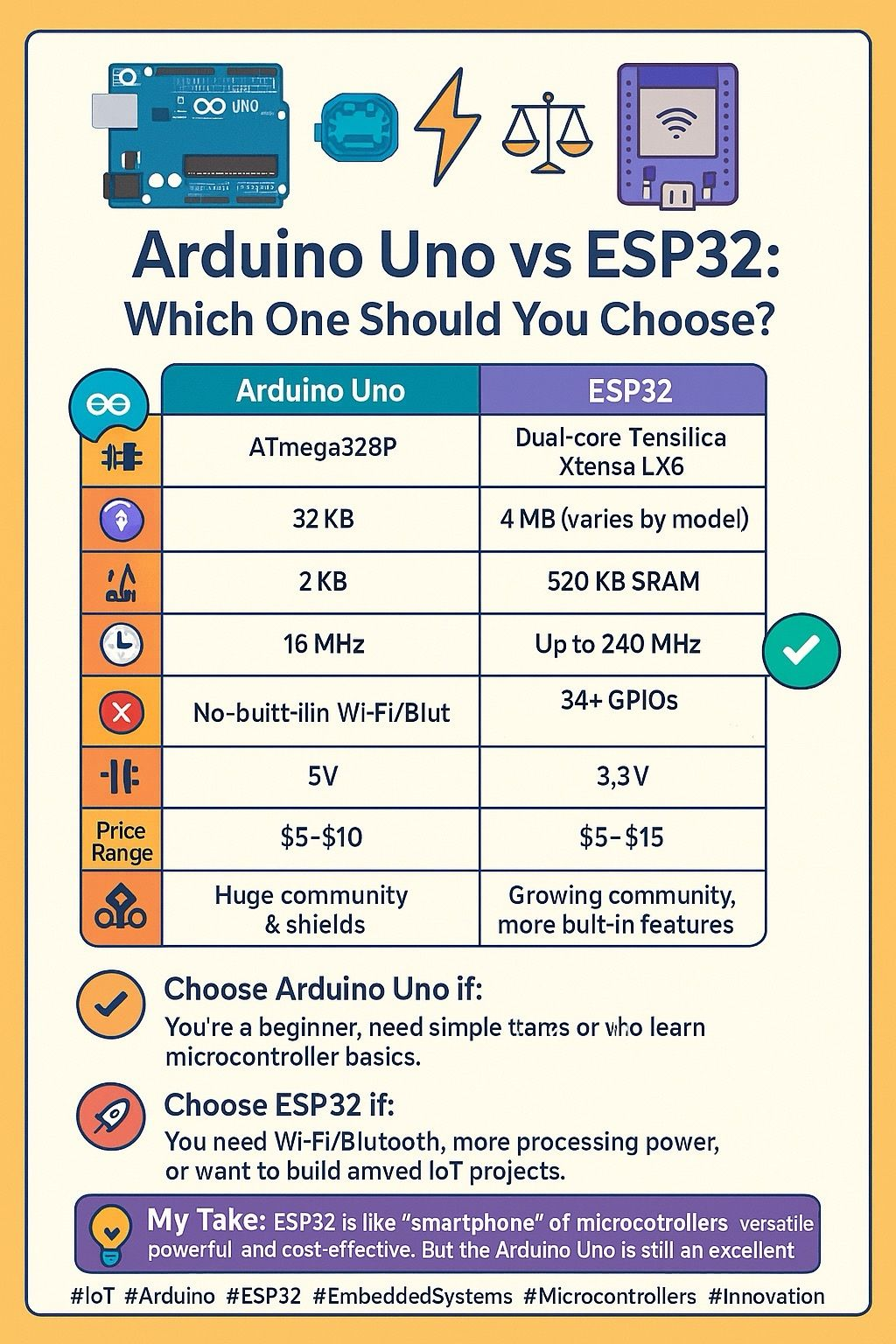
- Microcontroller: ATmega328P
- Clock Speed: 16 MHz
- Flash Memory: 32 KB
- RAM: 2 KB
- Connectivity: No built-in Wi-Fi or Bluetooth
- Operating Voltage: 5V
- Best For: Beginners, simple electronics projects, and utilizing massive community plug-and-play shields.
ESP32
- Microcontroller: Dual-core processor (Tensilica Xtensa LX6)
- Clock Speed: Up to 240 MHz
- Flash Memory: 4 MB (varies)
- RAM: 520 KB
- Connectivity: Built-in Wi-Fi & Bluetooth
- Operating Voltage: 3.3V
- Best For: Complex IoT applications, wireless connectivity, and projects requiring high performance.
Comparison Summary
| Feature | Arduino Uno | ESP32 |
|---|---|---|
| Processor | Single-core 8-bit | Dual-core 32-bit |
| Speed | 16 MHz | 240 MHz |
| Wireless | None | Wi-Fi & Bluetooth |
| Voltage | 5V | 3.3V |
My Take
ESP32 is like the smartphone of microcontrollers — powerful, feature-rich, and still affordable. But Arduino Uno is a fantastic choice for beginners to understand the fundamentals of electronics and coding.
Choose Arduino Uno if:
You’re just getting started and need a simple, reliable platform to learn.
Choose ESP32 if:
You’re building wireless, smart, or advanced IoT projects and need more performance and connectivity.