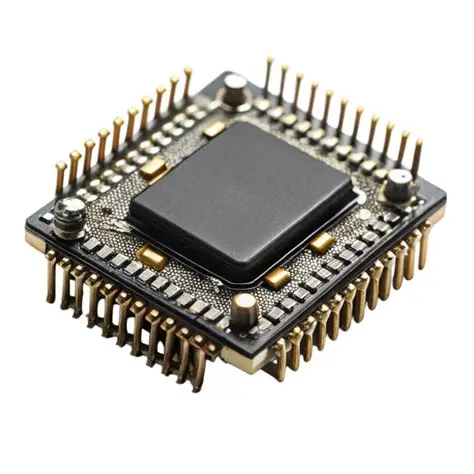
The Tiny Brains Behind the IoT Revolution: Understanding Microcontroller Units (MCUs)
In today's connected world, a single component is often the unsung hero enabling real-time control and smart functionality in everything from your smart thermostat to your car's engine management system: the Microcontroller Unit (MCU).
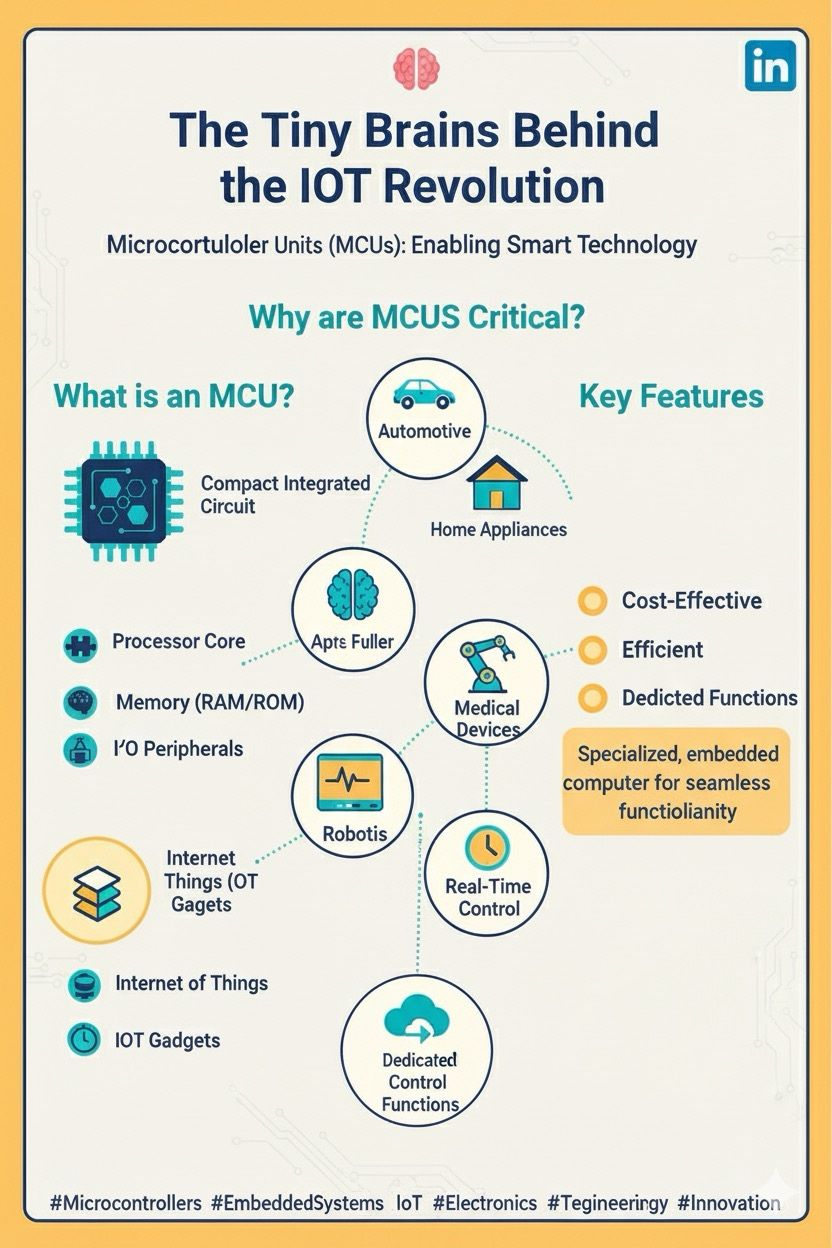
What is an MCU?
An MCU is a compact integrated circuit designed as a complete, small computer on a single chip. It efficiently packs all the essentials:
- Processor Core (CPU): For processing instructions.
- Memory (RAM/ROM/Flash): For temporary and permanent data storage.
- I/O Peripherals: To interface with the outside world (sensors, motors, displays, etc.).
Unlike power-hungry, general-purpose microprocessors, MCUs are built to be cost-effective and efficient. They eliminate the need for numerous external components, offering a sleek, all-in-one solution for embedded systems.
Why are MCUs Critical?
MCUs specialize in performing dedicated control functions efficiently and reliably. They are the workhorses of:
- Automotive Controls
- Home Appliances
- Medical Devices
- Robotics
- Internet of Things (IoT) Gadgets
They interpret data from inputs, process it swiftly, and control outputs accordingly, enabling real-time control that is crucial for safety and performance.
In essence, the MCU is a specialized, embedded small computer that provides the intelligence and control necessary for our modern electronic devices to function seamlessly.
#Microcontrollers #EmbeddedSystems #IoT #Electronics #Technology #Engineering